
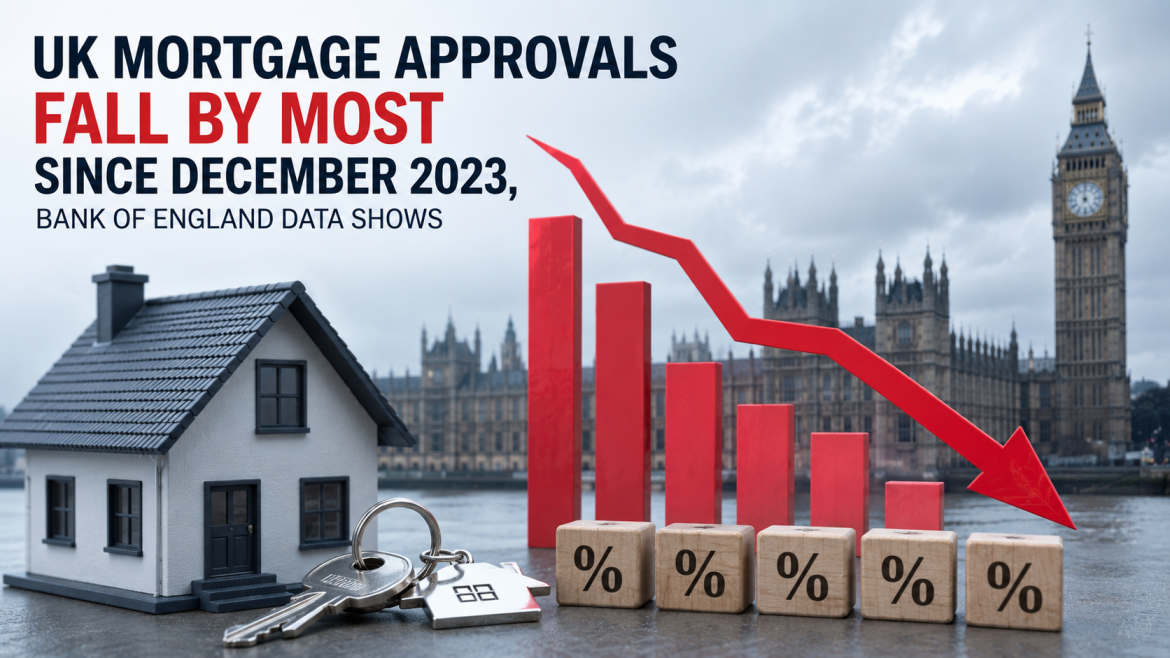
British mortgage approvals fell to their lowest level since December 2023 in May, while consumer lending grew less than expected, according to new Bank of England data highlighting the impact of higher borrowing costs and weaker household confidence.
The Bank of England reported that lenders approved 56,205 mortgages during May, down from 66,034 in April and well below economists’ expectations of 62,900 approvals.
Net unsecured consumer lending increased by £1.662bn during the month, falling short of the £1.8bn forecast by economists and marking the smallest monthly increase since December 2025.
On a three-month moving average basis, annual consumer lending growth slowed to 8.7%, representing the weakest pace recorded since October 2025.
Property market experts said the housing sector remained relatively resilient during March and April, with mortgage lending broadly in line with long-term averages, but May’s figures suggest more prospective buyers are delaying purchasing decisions.
Analysts attributed the slowdown to persistent inflation concerns, rising living costs and weakening consumer confidence, all of which have reduced demand across the housing market.
Industry experts also said that the recent agreement between the United States and Iran could help ease mortgage rates if lower energy prices are sustained, although ongoing political uncertainty surrounding the search for a successor to Prime Minister Keir Starmer may continue to weigh on market sentiment.
Higher mortgage rates and weaker consumer confidence since the start of the Iran conflict have contributed to softer house prices and reduced buyer demand across the UK property market.
The Bank of England also reported that net mortgage lending, which reflects completed property transactions rather than approvals, fell to £2.889bn in May, the lowest monthly total in a year and down from £4.439bn recorded in April.

