
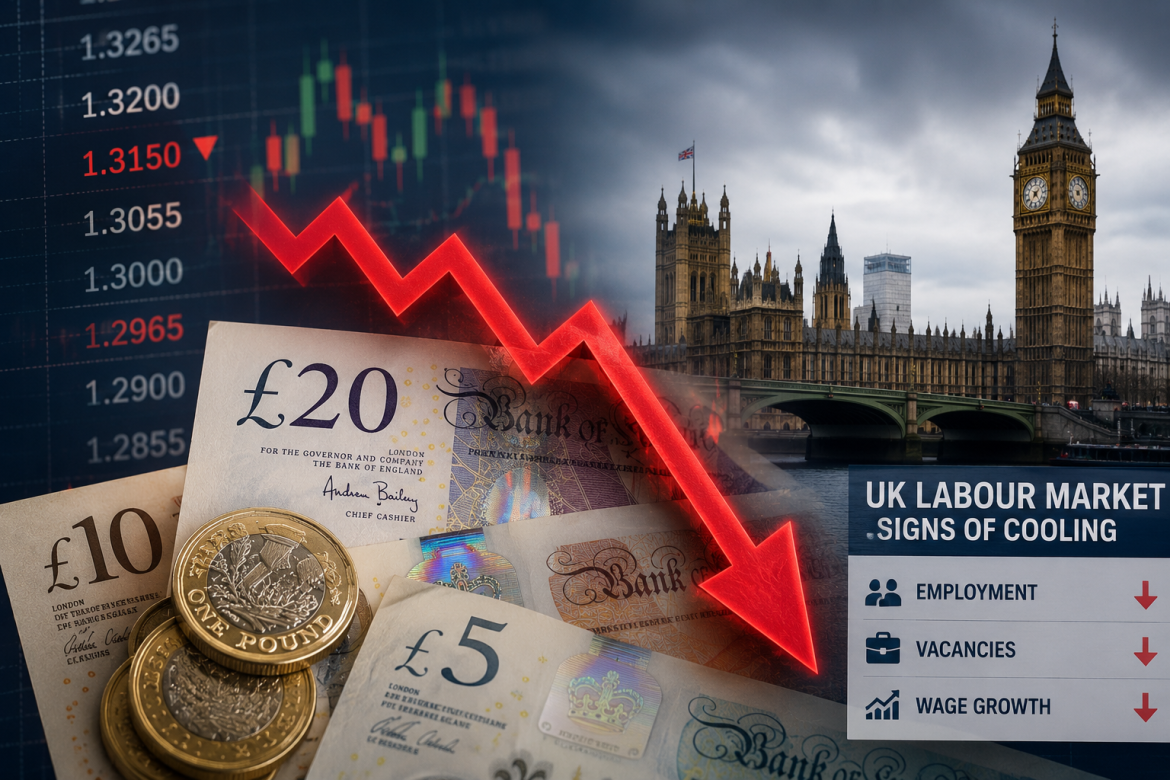
The pound edged lower on Tuesday after UK labour market data pointed to a slowdown in employment conditions. Britain’s unemployment rate remained above expectations in June, while the number of job vacancies fell in July.
Sterling was down 0.1% against the dollar at $1.352 after reaching its highest level since May on Monday. The currency had gained as traders reduced expectations for further US Federal Reserve rate hikes.
Oil prices moved slightly higher as the Iran war continued, with Washington and Tehran both threatening further military action. The developments supported demand for the safe-haven US dollar.
Official figures released on Tuesday showed Britain’s unemployment rate held at 4.9% in June. Economists surveyed by Reuters had expected the rate to fall to 4.8%.
The Office for National Statistics also reported that UK job vacancies fell to 707,000 in the three months to July. That was the lowest level since 2021 and down from 711,000 in the three months to June.
Private-sector regular pay growth also weakened. Earnings increased by 2.8% year-on-year in the three months to June, marking the slowest growth since the three months to October 2020.
The pound was also slightly weaker against the euro, with the single currency up 0.05% at 85.54 pence.
“The basic story here is that the jobs market is cool,” said James Smith, developed markets economist at ING.
“Barring a severe and persistent spike in energy prices, we think the Bank (of England) will keep rates on hold until next spring, before cutting rates at least twice in 2027.”
Despite the weaker labour market data, money markets are still pricing in an interest rate increase by the Bank of England before the end of the year. Traders are currently pricing around 30 basis points of monetary tightening.
The pound has recently benefited from several factors that have weakened the US dollar. These include US and Japanese intervention to support the yen in late July, reduced expectations for Federal Reserve rate hikes and relatively subdued oil prices despite the continuing US-Iran conflict.

