
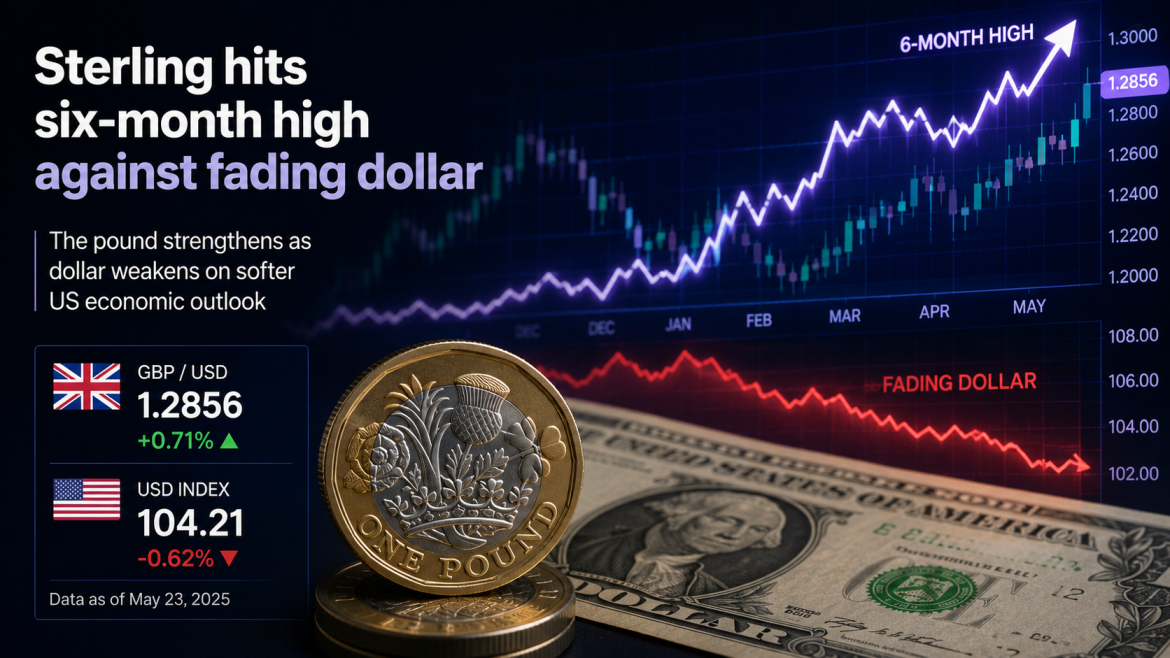
The British pound rose to a six-month high against the US dollar on Thursday. The move came a day after the US Treasury announced an unexpected step to contain rising long-term borrowing costs.
Sterling gained 0.4% against the dollar to $1.3661, its highest level since February 16. The dollar index, which tracks the US currency against six major currencies including sterling, fell 0.2% to 98.61.
The US Treasury said it would at least double its purchases of longer-dated Treasury securities. The announcement pushed the 30-year US Treasury yield sharply lower after it had reached its highest level since 2007 earlier in the week.
“A U.S. Treasury actively signalling that it is looking to cap long-term yields is bearish news for the U.S. dollar,” said Louis-Vincent Gave, CEO at Gavekal Research.
“If U.S. long-term yields are indeed now capped, this sudden outperformance should continue since, if nothing else, the U.S. Treasury’s move puts investors long the U.S. dollar on notice.”
Rise in inflation
Domestic factors have also supported sterling in recent weeks. UK inflation remains elevated, leading investors to expect higher borrowing costs from the Bank of England.
Annual inflation rose to a four-month high of 2.9% in July, according to figures released on Wednesday. However, labour market data published earlier in the week showed signs of weaker employment conditions.
“It’s more of the same in terms of underwhelming growth, slightly uncomfortable inflation and a lacklustre employment market,” said Jonathan Pryor, head of private markets & co-head of dealing at Marex FX.
“A lot of the numbers in the last week have fed into that. I think challenges remain and all that feeds back into the Bank of England and a very difficult balance between keeping an eye on inflation whilst manipulating rates to a point where they can entertain growth.”
Tightening expectations
Money-market traders continue to expect the Bank of England to raise interest rates once before the end of the year. A second quarter-point increase is also fully priced in by April next year.
However, ING global head of markets Chris Turner expects sterling could weaken against the euro. He believes the Bank of England may keep interest rates unchanged this year.
“We think euro-sterling will go higher towards the end of the year when Bank of England tightening expectations come out of the market,” Turner said.
“But that doesn’t look like it’s going to happen for the next few weeks anyway so we think euro-sterling hangs around here.”
The pound was little changed against the euro on Thursday at 85.78 pence.

