
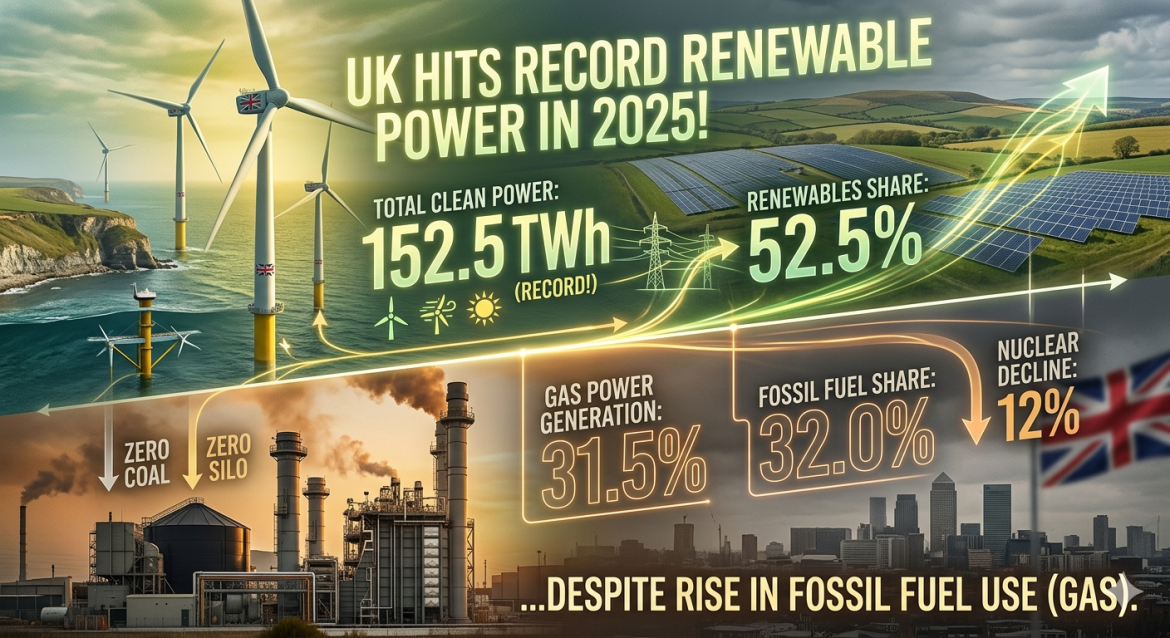
Renewable energy sources such as wind and solar generated a record 52.5% of Britain’s electricity in 2025, according to data from the Department for Energy Security and Net Zero, although fossil fuel use also increased.
Total renewable output reached 152.5 terawatt hours, up 5.7% from 2024, driven by strong performance in offshore wind, solar and bioenergy. Offshore wind generation alone rose 6.6% as new capacity came online.
Despite the growth in renewables, gas remained the single largest source of electricity, accounting for 31.5% of total generation after output increased by 4.7%. This rise, alongside renewables, helped offset a significant drop in nuclear generation, which fell 12% to 35.9 TWh due to plant closures and outages across the ageing fleet.
Notably, 2025 marked the first year in more than 140 years that Britain generated no electricity from coal, following the closure of its last coal-fired power station in 2024.
Net electricity imports declined by 11% to 29.7 TWh, while total demand edged up slightly by 0.2% to 320.2 TWh.
The UK government also reported that overall greenhouse gas emissions fell by 2% in 2025, with emissions from the electricity sector down by 1%, highlighting continued — though uneven — progress toward its goal of largely decarbonising the power system by 2030.

